Firm Obtains Short Sentence for Ecuadorian Businessman in FCPA Case

Feldman Firm Obtains Very Lenient Sentence for Ecuadorian Businessman in FCPA Case


The Firm obtained a very lenient sentence for an Ecuadorian businessman charged with FCPA and money laundering violations (La Ley de Practicas Corruptas en El Extranjero y Blanqueo de Dinero). Law 360 covered the story: Reinsurer Gets Short Prison Stint In Ecuadorian Bribery Case – Law360 UK

A Florida federal judge sentenced a reinsurance manager to 10 months of time served in prison for his role in a $3 million Ecuadorian bribery scheme following a hearing in Miami court on Tuesday, potentially allowing him to leave the country to reunite with his family in South America.

U.S. District Judge Kathleen M. Williams handed down her sentence to Cristian Patricio Pintado following a hearing in the Southern District of Florida after he pled guilty to a money laundering charge. In April, Pintado admitted to wiring approximately $87,000 from a Panamanian bank account in the name of a reinsurance intermediary company to a U.S. bank account listed in the name of an associate.

The transaction was a part of a larger scheme between 2013 and 2018 that involved bribing officials at the top of Ecuadorian state-controlled insurance agencies known as Seguros Sucre in exchange for business, according to prosecutors. U.S. government officials added that Pintado, who is a dual Ecuadorian and Italian citizen, resided in Costa Rica while the scheme was occurring.

Several other persons, including Polit and Juan Ribas ( the president of Seguros Sucre) have been convicted or plead guilty in these cases but were sentenced to 5-10 years of imprisonment. 

Andrew S. Feldman of Feldman Firm PLLC, Pintado’s attorney, told Law360 in an email that his client did not cooperate with the government and was given time served even though sentencing guidelines called for nearly six years in prison.

“Mr. Pintado is extremely pleased with Judge Williams’ sentence of time served,” Feldman said. “We are hoping that Mr. Pintado will be able to self-deport to his home in Quito to reunite with his wife and children.”

The case is U.S. v. Merlo Hidalgo et al., case number 1:22-cr-20311, in the U.S. District Court for the Southern District of Florida.

The Firm has experience representing foreign officials in FCPA cases throughout Latin America including Ecuador, Peru, Venezuela, and Colombia.  Through an Executive Order, the Trump Administration had placed a temporary pause on certain FCPA prosecutions but that “pause” is long over and the Executive Order has not resulted in many dismissals or caused any significant hurdles to investigations or prosecutions of FCPA violations.

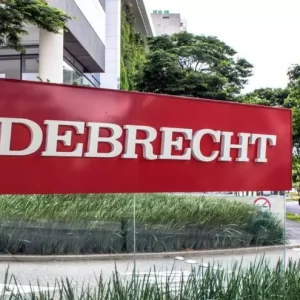
Feldman Firm Quoted in Global Investigations Review Regarding Client Asset Freeze Related to Supposed Bribes from Odebrecht

Global Investigations Review Covers Feldman Firm Client in Odebrecht Money Laundering Case

Today, Global Investigations Review covered the Firm’s client:Peruvian-couple-asks-to-speed-up-Odebrecht-linked-forfeiture-case-Global-Investigations-Review.pdf

A Peruvian couple wants to speed up US forfeiture proceedings targeting a bank account that prosecutors say is linked to a decade-old bribery scheme at Brazilian construction group Odebrecht.

US prosecutors asked to forfeit the bank account in 2019 on grounds that it was among several used to launder $14 million in bribes paid by Odebrecht to Latin American officials for lucrative construction contracts.

More than six years later, the owners of the bank account, Gonzalo Eduardo Monteverde Bussalleu and Maria Isabel Carmona Bernasconi, say it’s more than time to move the case along.

In a 29 May filing, Andrew Feldman, a lawyer for the couple, urged US District Judge William Kuntz to schedule an in-person status hearing for late June to discuss the “direction” of the case and allow oral argument on pending motions, as well as to set a pretrial and trial schedule.

“This case is 6 years old, and the assets freeze is nearing its 8th birthday,” said Feldman, a solo practitioner in Miami. “In person hearings have never been set in this case, no pretrial deadlines have been set, no trial date has been set,” he said.

Feldman said that some pending motions, including two to dismiss the case, were filed more than 900 days ago. The DOJ has asked to appear remotely and has not agreed to any pretrial dates or a trial date, Feldman said in the filing, adding that he believes an in-person hearing is “critical”.

“When the US government deprives someone of millions of dollars in assets through civil forfeiture then after 8 years they should be ready to prove their case,” the lawyer told GIR in an email. Since the account was first seized in 2017, “the government has demonstrated no intent to ever proceed to trial or even physically appear for a hearing”, he added.

Monteverde and Carmona have never been charged with a crime “anywhere in the world”, though Peruvian authorities have “opened and closed investigations” into the couple over the course of 15 years, he added.

Feldman has long complained about delays in the case.

Between April 2019 and September 2022, the case was stayed at prosecutors’ request to protect the DOJ’s investigation into the Odebrecht bribery scheme. In November 2022, Feldman argued that the delay violated his clients’ due process rights, adding that the “substantial deprivation” of their property is “inherently prejudicial” to the couple and impacted their ability to defend themselves in the case.

The couple’s bank account is currently held at Florida-based wealth management firm Raymond James & Associates and controlled by Deltora Enterprises Group, a company that is incorporated in the British Virgin Islands and owned by the couple, according to a court declaration by Monteverde.

In their 2019 complaint, prosecutors said their request to forfeit the couple’s assets is predicated on violations of the FCPA andPanamanian criminal code.

Odebrecht entered into a multibillion-dollar resolution with US, Swiss and Brazilian authorities in 2016 to settle its role in a briberyscheme that spanned 12 countries, including Peru.

Feldman Firm Obtains Complete Acquittal in 65 Million Dollar Health Care Fraud and Kickback Trial

Feldman Firm Obtains Complete Acquittal in Alleged 65 Million Dollar Health Care Fraud and Kickback Conspiracy Involving COVID 19 and Genetic Testing

Following a four-week trial in Miami involving a supposed $65 Million health care fraud, kickback, and money laundering conspiracy, the Firm obtained acquittals across the board for the Client.

Background

A grand jury returned an indictment against 5 defendants: the Firm’s client, an owner of a clinical laboratory in San Antonio Texas, two of the other owners of the lab, and two of the leading sales and marketing representatives for the lab.

Prior to owning the laboratory, the Firm’s Client was a former district manager of Pfizer who had enjoyed success in the healthcare space.

The Firm’s Client and one other owner proceeded to trial and were acquitted. The other two owners plead guilty, cooperated, and testified against the Firm’s Client at trial.

The Laboratory and the Kickback and Fraud Allegations

At its inception in 2019 right before the COVID-19 pandemic began, the laboratory specialized in pharmacogenomic (or PGX) testing – testing which can prevent death in two ways. First, by identifying genetic variants that predispose a patient to adverse drug reactions. Second, by identifying genetic variants that predispose a patient to cardiac arrest. 

Once COVID-19 began, the lab rapidly transitioned into COVID-19 polymerase chain reaction (PCR) testing to deploy PCR tests to patients all over the U.S. during the pandemic. The lab set up “pop-up” or collection sites throughout Texas, Florida, and other states. Some of those sites were managed by two of the cooperating co-defendants. Those defendants managed those sites, paid for collectors, paid for supplies, and were stationed near doctors’ offices or in parking lots of grocery stores or adult day care centers.

The government alleged a multi-year health care fraud, kickback, and money laundering conspiracy against these men. The government further insisted that the lab billed Medicare, HRSA, and commercial insurers like Blue Cross Blue Shield $65 Million dollars which the government claimed was all proceeds of fraud and kickbacks. Among other things, the government alleged that the Firm’s client and the other defendants paid kickbacks in two ways: first to doctors to refer PGX tests to the lab; and second, to marketers or molecular consultants for referring specimens used for COVID-19 PCR tests. The government also alleged that the health care fraud was perpetrated through double-billing, utilization of a COVID-19 test that had not received Emergency Use Authorization (EUA), billing in violation of the “one PCR test” Rule, billing for PGX and COVID-19 tests in violation of the Shell Lab Rule, billing for medically unnecessary COVID-19 and PGX tests, and billing for PGX tests using the highest reimbursing CPT codes for the largest genetic panel which, in some cases, included testing for what the government referred to as “rare diseases” and what one email during trial referred to as supposed “fraudomatic codes.”  

Shortly Before Trial

Less than a month before trial, two of the co-defendants plead guilty including one of the owners of the lab. The Firm’s Client and the owner of the lab proceeded to trial.

Trial

The trial lasted nearly a month. To prove the supposed fraud, kickback, and money laundering conspiracies related to genetic testing and COVID-19, the government relied on cooperators (including 2 of the former owners of the lab), an expert cardiologist from the University of Pennsylvania, a financial analyst from the FBI, an expert program witness, fraud investigators representing commercial insurers (BCBS and Cigna), a program witness from HRSA, and even a microbiologist from the FDA.

At trial, the Client’ defense was that the government’s case was “weak,” that there was no proof of bad intent, and that the indictment was based on an incomplete investigation and faulty assumptions about the Client’s relationships with physicians and about “MSOs.” This faulty understanding was highlighted throughout the trial because none of the government witnesses – including the cooperators – could explain or articulate what an “MSO” was. Nor could they explain the relationship between the Firm’s client and certain physicians. Similarly, the financial analyst for the government could not fill this gap for the jurors.

Indeed, in an extremely rare step, the court granted a judgment of acquittal as to the kickback and money laundering conspiracies.

In defense of the health care fraud conspiracy and the remaining health care fraud counts, the Client’s defense was that the owners began the lab to prevent death, and to treat patients during a once in the lifetime pandemic and that any supposed violations of constantly changing regulations were mistakes and nothing more.  The Client also utilized data, summaries, patient medical records, and charts to highlight problems with the government’s theories about the supposed fraud, about the claims data, and to illustrate that the Client and other owners of the lab did not act with bad intent.

Not Guilty Verdicts Across the Board

The jurors rendered not guilty verdicts across the board for the Client and the other owner.

Feldman Firm Obtains Sentence of Probation for Pharmacy Owner in Multi-Million Dollar Kickback Case Related to Dispensing “Footbath” Drugs

Last week the Feldman Firm, along with esteemed local counsel, obtained a sentence of probation for the Firm’s client, the owner of a mail-in pharmacy in a federal Anti-kickback prosecution in the Eastern District of Missouri (St. Louis) involving more than Five Million dollars. The Department of Justice continues to vigorously investigate pharmacy and laboratory fraud, abuse, and kickbacks.

The pharmacy specialized in dispensing topical creams, oral medications, and antibiotic and antifungal drugs referred to as “foot bath” drugs. The topical creams and oral medications were intended to treat a variety of conditions such as dry skin, pain and muscle spasms. Those drugs included, among others, corticosteroids, lidocaine, topical NSAIDs, and dermacin prizopak (a local anesthetic). The “foot bath” drugs were designed to treat a variety of foot infections and foot pain and included oral antibiotic capsules, bottles of antibiotic solution, and tubes of antifungal cream. Patients were instructed to mix the capsules and the solution with warm water to soak their feet, then to apply the antifungal cream afterward. The foot bath drugs included but were not limited to Vancomycin capsules, Clindamycin 1 % solution, and Ketoconazole 2% cream.

After pharmacy benefit managers (PBM’s) initiated audits and the government executed a search warrant at the pharmacy seizing equipment, electronics, and records, a grand jury returned an indictment alleging a conspiracy to commit health care fraud, a kickback conspiracy, and the payment of kickbacks to marketers.

More specifically, with respect to the relationship between the marketers and the Firm’s client, the government alleged that the owner of the pharmacy paid kickbacks to marketers who referred patients to the pharmacy utilizing a variety of marketing tactics. Two of those methods are noteworthy. The first one involved telehealth consultations with physicians who would prescribe and order the drugs. Another involved a marketing strategy known as “doctor chase” which is not per se unlawful when a marketing organization faxes a prescription pad to the primary care physician of a patient with a note that the patient has requested the drug and, for that reason, seeks the doctors’ authorization to prescribe that drug for their patient. In this case, as in many others, the doctors signed those prescriptions authorizing the pharmacy to dispense those drugs for those patients.

Regardless of the tactics employed by those marketing organizations, the Firm’s client did not manage, supervise, or participate in those marketing campaigns. Nor was there evidence adduced at any proceeding that he knew about the particulars of any marketers’ “doctor chase” model or knew that certain telehealth relationships were potentially non-compliant.

And even though the government alleged health care fraud, the client entered a resolution which avoided both a fraud charge and a conspiracy charge. Instead, the client resolved the case by agreeing to a plea which was limited to substantive violations of the federal Anti-Kickback statute under Title 42 U.S.C. Section 1320a-7b. This is because the case rested on the payments to marketers and the structure of those payments. Ultimately, as seen in many kickback cases involving marketers, the structure of payments is what led to the client’s conviction.

At sentencing, the Firm emphasized some of the salient Section 3553(a) factors including the history and characteristics of the client, his standing in the local community, his acts of generosity and charity, and his devotion to his church, among others. The court then sentenced the client to probation.

The Firm has a substantial amount of experience representing pharmacies and pharmacists and representing sales and marketing professionals in investigations and prosecutions involving allegations of kickbacks. The federal Anti-Kickback statute is a complex statute with safe-harbors, exceptions, and varying case law depending on the geography of the alleged conduct. The Firm regularly litigates these issues, issues related to advice of counsel in kickback cases, and issues related to restitution in kickback cases.

PPP Loan Lopez

FELDMAN FIRM OBTAINS DECLINATION OF PROSECUTION IN PPP LOAN FRAUD INVESTIGATION

FELDMAN FIRM OBTAINS RARE DECLINATION OF PROSECUTION IN PPP LOAN FRAUD INVESTIGATION TARGETING FIRM’S CLIENT

After more than 2 years, the government finally declined prosecution in a paycheck protection program (PPP) loan fraud investigation targeting the Firm’s client.

PPP Loan Lopez

The client was a recipient of the very first round of Small Business Administration (SBA) loans under the PPP loan program. The Firm’s client was (and is) a far cry from many of the egregious (and frankly absurd) PPP loan cases we see every day involving multiple loans for non-existent businesses and get-rich-quick schemes pioneered by all too typical South Florida fraudsters.

Instead, and in stark contrast to the criminals who brazenly pilfered federal funds at the expense of taxpayers, the Firm’s client operated a successful logistics business transporting cargo throughout the country. The company’s success had even garnered attention in local papers in the Tampa area. The company had employees, payroll, and dozens of contracted drivers. Fast forward to the pandemic and March of 2020. The economic uncertainties of the pandemic caused the business, like many successful businesses, to wind down operations.

In October of 2021, the government then began investigating the business and its principals in connection with civil litigation wholly unrelated to PPP loans.

The investigation involved many of the usual suspects: interviews of witnesses, grand jury subpoenas to financial institutions for financial records, and grand jury subpoenas to the company. However, there was one wrinkle you do not see that often. The government called witnesses to testify before a grand jury at least twice. Usually when that occurs, the purpose of the testimony is to return an indictment, not to test the validity of the government’s theory or its evidence.

Recognizing the flaws in the investigation and the prosecutions theory, the Firm had a series of meetings with the government which were ultimately non-committal. The Firm then presented a white paper about the SBA PPP loan program, reinforced the good character and strong community ties of the client, and proposed alternatives to prosecution consistent with the directives in the Justice Manual.

In the end, justice prevailed. The government declined prosecution and the client’s life continues uninterrupted without the lingering threat of a federal indictment.

 The Firm represents clients under investigation and accused of paycheck protection program PPP loan fraud. We would be more than happy to confer with you if you or your business has been the subject of a grand jury subpoena, civil investigative demand, or government inquiry involving a loan under the SBA paycheck protection program.